List
Heart Eyes
View Details
Sonic the Hedgehog 3
View Details
Summer Snow
Robert Hass
A major collection of entirely new poems from the Pulitzer Prize and National Book Award-winning author of Time and Materials and The Apple Trees at Olema
A new volume of poetry from Robert Hass is always an event. In Summer Snow, his first collection of poems since 2010, Hass further affirms his position as one of our most highly regarded living poets. Hass's trademark careful attention to the natural world, his subtle humor, and the delicate but wide-ranging eye he casts on the human experience are fully on display in his masterful collection. Touching on subjects including the poignancy of loss, the serene and resonant beauty of nature, and the mutability of desire, Hass exhibits his virtuosic abilities, expansive intellect, and tremendous readability in one of his most ambitious and formally brilliant collections to date.
How to Fly (in Ten Thousand Easy Lessons)
Barbara Kingsolver
"A gorgeous collection. . . . These poems unplug from TV and social media and the outrage of the moment and turn our attention to the immediate and the everlasting, human intimacy and the power and mystery of nature." --Tampa Bay Times
In this intimate collection, Barbara Kingsolver, beloved author of The Poisonwood Bible and the Pulitzer Prize-winning Demon Copperhead, and recipient of numerous literary awards including the National Book Foundation's Medal for Distinguish Contribution to American Letters, trains her eye on the everyday and the metaphysical in poems that are beautifully crafted, emotionally rich, and luminous
In her second poetry collection, Kingsolver offers reflections on the practical, the spiritual, and the wild. She begins with "how to" poems addressing everyday matters such as being hopeful, married, divorced; shearing a sheep; praying to unreliable gods; doing nothing at all; and of course, flying. Next come rafts of poems about making peace (or not) with the complicated bonds of friendship and family, and making peace (or not) with death, in the many ways it finds us. Some poems reflect on the redemptive powers of art and poetry itself; others consider where everything begins. Closing the book are poems that celebrate natural wonders--birdsong and ghost-flowers, ruthless ants, clever shellfish, coral reefs, deadly deserts, and thousand-year-old beech trees--all speaking to the daring project of belonging to an untamed world beyond ourselves.
Altogether, these are poems about transcendence: finding breath and lightness in life and the everyday acts of living. It's all terribly easy and, as the title suggests, not entirely possible. Or at least, it is never quite finished.
Dearly
Margaret Atwood
A new book of poetry from internationally acclaimed, award-winning and bestselling author Margaret Atwood
In Dearly, Margaret Atwood's first collection of poetry in over a decade, Atwood addresses themes such as love, loss, the passage of time, the nature of nature and - zombies. Her new poetry is introspective and personal in tone, but wide-ranging in topic. In poem after poem, she casts her unique imagination and unyielding, observant eye over the landscape of a life carefully and intuitively lived.
While many are familiar with Margaret Atwood's fiction--including her groundbreaking and bestselling novels The Handmaid's Tale, The Testaments, Oryx and Crake, among others--she has, from the beginning of her career, been one of our most significant contemporary poets. And she is one of the very few writers equally accomplished in fiction and poetry. This collection is a stunning achievement that will be appreciated by fans of her novels and poetry readers alike.
Call Us What We Carry
Amanda Gorman
The instant #1 New York Times, Wall Street Journal, and USA Today bestseller
The breakout poetry collection by #1 New York Times bestselling author and presidential inaugural poet Amanda Gorman
Formerly titled The Hill We Climb and Other Poems, the luminous poetry collection by #1 New York Times bestselling author and presidential inaugural poet Amanda Gorman captures a shipwrecked moment in time and transforms it into a lyric of hope and healing. In Call Us What We Carry, Gorman explores history, language, identity, and erasure through an imaginative and intimate collage. Harnessing the collective grief of a global pandemic, this beautifully designed volume features poems in many inventive styles and structures and shines a light on a moment of reckoning. Call Us What We Carry reveals that Gorman has become our messenger from the past, our voice for the future.
The Best American Poetry 2024
David Lehman
Renowned poet Mary Jo Salter, whose command of verse forms and high intelligence is universally acknowledged, selects the poems for the 2024 edition of The Best American Poetry, “a ‘best’ anthology that really lives up to its title” (Chicago Tribune).
The Best American Poetry series has been “one of the mainstays of the poetry publication world” (Academy of American Poets) since 1988. Each volume presents a curated selection of the year’s most brilliant, striking, and innovative poems, with comments from the poets themselves offering unique insight into their work.
Here, guest editor Mary Jo Salter, whose own poems display a sublime wit “driven by a compulsion to confront the inexplicable” (James Longenbach), has picked seventy-five poems that capture the dynamism of American poetry today. The series and guest editors contribute valuable introductory essays that assess the current state of American poetry, and this year’s edition is certain to capture the attention of both Best American Poetry loyalists and newcomers to the most important poetry anthology of our time.
American Melancholy
Joyce Carol Oates
A new collection of poetry from an American literary legend, her first in twenty-five years
Joyce Carol Oates is one of our most insightful observers of the human heart and mind, and, with her acute social consciousness, one of the most insistent and inspired witnesses of a shared American history.
Oates is perhaps best known for her prodigious output of novels and short stories, many of which have become contemporary classics. However, Oates has also always been a faithful writer of poetry. American Melancholy showcases some of her finest work of the last few decades.
Covering subjects big and small, and written in an immediate and engaging style, this collection touches on both the personal and political. Loss, love, and memory are investigated, along with the upheavals of our modern age, the reality of our current predicaments, and the ravages of poverty, racism, and social unrest. Oates skillfully writes characters ranging from a former doctor at a Chinese People's Liberation Army hospital to Little Albert, a six-month-old infant who took part in a famous study that revealed evidence of classical conditioning in human beings.
The Wild Fox of Yemen
Threa Almontaser
Longlisted for the National Book Award for Poetry
Winner of the Walt Whitman Award of the Academy of American Poets, selected by Harryette Mullen
By turns aggressively reckless and fiercely protective, always guided by faith and ancestry, Threa Almontaser’s incendiary debut asks how mistranslation can be a form of self-knowledge and survival. A love letter to the country and people of Yemen, a portrait of young Muslim womanhood in New York after 9/11, and an extraordinarily composed examination of what it means to carry in the body the echoes of what came before, Almontaser’s polyvocal collection sneaks artifacts to and from worlds, repurposing language and adapting to the space between cultures. Half-crunk and hungry, speakers move with the force of what cannot be contained by the limits of the American imagination, and instead invest in troublemaking and trickery, navigate imperial violence across multiple accents and anthems, and apply gang signs in henna, utilizing any means necessary to form a semblance of home. In doing so, The Wild Fox of Yemen fearlessly rides the tension between carnality and tenderness in the unruly human spirit.
Weaving Sundown in a Scarlet Light
Joy Harjo
A magnificent selection of fifty poems to celebrate three-term US Poet Laureate Joy Harjo’s fifty years as a poet.
Over a long, influential career in poetry, Joy Harjo has been praised for her “warm, oracular voice” (John Freeman, Boston Globe) that speaks “from a deep and timeless source of compassion for all” (Craig Morgan Teicher, NPR). Her poems are musical, intimate, political, and wise, intertwining ancestral memory and tribal histories with resilience and love.
In this gemlike volume, Harjo selects her best poems from across fifty years, beginning with her early discoveries of her own voice and ending with moving reflections on our contemporary moment. Generous notes on each poem offer insight into Harjo’s inimitable poetics as she takes inspiration from Navajo horse songs and jazz, reckons with home and loss, and listens to the natural messengers of the earth. As evidenced in this transcendent collection, Joy Harjo’s “poetry is light and elixir, the very best prescription for us in wounded times” (Sandra Cisneros, Millions).
Wearing My Mother's Heart
Sophia Thakur
Performance poet Sophia Thakur offers a powerful new collection touching on intergenerational relationships, finding your voice, and what it means to be a woman.
In her heartfelt second poetry collection, Sophia Thakur takes us on an emotionally charged journey through the lives of women in the past and considers what it means to be a woman today. Exploring topics such as identity, race, politics, mental health, and self-love, she weaves together the voices of a grandmother, mother, and daughter and examines how previous generations have given us the freedom to speak out. Encompassing love from first crush to breakup, as well as the history that comes before us and the brave moments that make us, this collection will resonate with all young women as they approach the joys and pain of adulthood.
Time Is a Mother
Ocean Vuong
"Take your time with these poems, and return to them often.” —The Washington Post
The New York Times-bestselling collection of poems from the award-winning writer Ocean Vuong
How else do we return to ourselves but to fold
The page so it points to the good part
In this deeply intimate second poetry collection, Ocean Vuong searches for life among the aftershocks of personal and social loss, embodying the paradox of sitting in grief while being determined to survive beyond it. Shifting through memory, and in concert with the themes of his novel On Earth We’re Briefly Gorgeous, Vuong contends with the meaning of family and the cost of being the product of an American war in America. At once vivid, brave, and propulsive, these poems circle fragmented lives to find both restoration as well as the epicenter of the break.
The author of the critically acclaimed poetry collection Night Sky with Exit Wounds, winner of the 2016 Whiting Award, the 2017 T. S. Eliot Prize, and a 2019 MacArthur fellowship, Vuong writes directly to our humanity without losing sight of the current moment. These poems represent a more innovative and daring experimentation with language and form, illuminating how the themes we perennially live in and question are truly inexhaustible. Bold and prescient, and a testament to tenderness in the face of violence, Time Is a Mother is a return and a forging forth all at once.
Spoken Word
Joshua Bennett
A “rich hybrid of memoir and history” (The New Yorker) of the literary art form that has transformed the cultural landscape, by one of its influential practitioners, an award-winning poet, professor, and slam champion
“Bennett…transport[s] us back to the city blocks, bars, cafes and stages these artists traversed and inhabited…an instructive text for young poets, artists or creative entrepreneurs trying to find a way to carve out a space for themselves…Shines with a refreshing dynamism.” —The New York Times
In 2009, when he was twenty years old, Joshua Bennett was invited to perform a spoken word poem for the Obamas, at the same White House "Poetry Jam" where Lin-Manuel Miranda declaimed the opening bars of a work-in-progress that would soon revolutionize American theater. That meeting is but one among many in the trajectory of Bennett's young life, as he rode the cresting wave of spoken word through the 2010s. But in this book, he is not a memoirist so much as a participant historian, who goes back to the roots of the spoken word form, considering the Black Arts movement and the prominence of poetry and song in Black education; the origins of the famed Nuyorican Poets Cafe in the Lower East Side living room of the visionary Miguel Algarín, who hosted verse gatherings with legendary figures like Ntozake Shange and Miguel Piñero; the rapid growth of the "slam" format that was pioneered at the Get Me High Lounge in Chicago; the perfect storm of spoken word's rise during the explosion of social media; the stories and perspectives of many others on this journey, as they helped shape spaces dedicated to literature as practiced with urgency by people of color and to the pursuit of human freedom.
A celebration of voices outside the dominant cultural narrative, who boldly embraced an array of styles and forms and redefined what—and whom—the mainstream would include, Bennett's book illuminates the profound influence spoken word has had everywhere melodious words are heard, from Broadway to academia, from the podiums of political protest to cafés, schools, and rooms full of strangers all across the world.
Poetry Unbound
Pádraig Ó Tuama
In the tumult of our contemporary moment, poetry has emerged as an inviting, consoling outlet with a unique power to move and connect us, to inspire fury, tears, joy, laughter, and surprise. This generous anthology pairs fifty illuminating poems with poet and podcast host Pádraig Ó Tuama's appealing, unhurried reflections. With keen insight and warm personal anecdotes, Ó Tuama considers each poem's artistry and explores how its meaning can reach into our own lives.
Focusing mainly on poets writing today, Ó Tuama engages with a diverse array of voices that includes Ada Limón, Ilya Kaminsky, Margaret Atwood, Ocean Vuong, Layli Long Soldier, and Reginald Dwayne Betts. Natasha Trethewey meditates on miscegenation and Mississippi; Raymond Antrobus makes poetry out of the questions shot at him by an immigration officer; Martín Espada mourns his father; Marie Howe remembers and blesses her mother's body; Aimee Nezhukumatathil offers comfort to her child-self. Through these wide-ranging poems, Ó Tuama guides us on an inspiring journey to reckon with self-acceptance, history, independence, parenthood, identity, joy, and resilience.
For anyone who has wanted to try their hand at a conversation with poetry but doesn't know where to start, Poetry Unbound presents a window through which to celebrate the art of being alive.
Musical Tables
Billy Collins
NATIONAL BESTSELLER • From the former United States Poet Laureate and New York Times bestselling author of Aimless Love, a collection of more than 125 small poems, all of them new, and each a thought or observation compressed to its emotional essence
“Whenever I pick up a new book of poems, I flip through the pages looking for small ones. Just as I might have trust in an abstract painter more if I knew he or she could draw a credible chicken, I have faith in poets who can go short.”—Billy Collins
You can spot a Billy Collins poem immediately. The amiable voice, the light touch, the sudden turn at the end. He "puts the ‘fun’ back in profundity,” says poet Alice Fulton. In his own words, his poems tend to “begin in Kansas and end in Oz.”
Now “America’s favorite poet” (The Wall Street Journal) has found a new form for his unique poetic style: the small poem. Here Collins writes about his trademark themes of nature, animals, poetry, mortality, absurdity, and love—all in a handful of lines. Neither haiku nor limerick, the small poem pushes to an extreme poetry’s famed power to condense emotional and conceptual meaning. Inspired by the small poetry of writers as diverse as William Carlos Williams, W.S. Merwin, Kay Ryan, and Charles Simic, and written with Collins’s recognizable wit and wisdom, the poems of Musical Tables show one of our greatest poets channeling his unique voice into a new phase of his exceptional career.
3:00 AM
Only my hand
is asleep,
but it’s a start.
The Hurting Kind
Ada Limón
An astonishing collection about interconnectedness—between the human and nonhuman, ancestors and ourselves—from National Book Critics Circle Award winner and National Book Award finalist Ada Limón.
“I have always been too sensitive, a weeper / from a long line of weepers,” writes Limón. “I am the hurting kind.” What does it mean to be the hurting kind? To be sensitive not only to the world’s pain and joys, but to the meanings that bend in the scrim between the natural world and the human world? To divine the relationships between us all? To perceive ourselves in other beings—and to know that those beings are resolutely their own, that they “do not / care to be seen as symbols”?
With Limón’s remarkable ability to trace thought, The Hurting Kind explores those questions—incorporating others’ stories and ways of knowing, making surprising turns, and always reaching a place of startling insight. These poems slip through the seasons, teeming with horses and kingfishers and the gleaming eyes of fish. And they honor parents, stepparents, and grandparents: the sacrifices made, the separate lives lived, the tendernesses extended to a hurting child; the abundance, in retrospect, of having two families.
Along the way, we glimpse loss. There are flashes of the pandemic, ghosts whose presence manifests in unexpected memories and the mysterious behavior of pets left behind. But The Hurting Kind is filled, above all, with connection and the delight of being in the world. “Slippery and waddle thieving my tomatoes still / green in the morning’s shade,” writes Limón of a groundhog in her garden, “she is doing what she can to survive.”
Dream Drawings
N. Scott Momaday
"[Momaday] must be ranked among the greatest of our contemporary writers."--American Scholar
"Momaday's poems are rich with description, lush with dreaming, and filled with magic." -- Library Journal (starred review)
From Pulitzer Prize winner and revered literary master N. Scott Momaday, a beautiful and enchanting new poetry collection, at once a celebration of language, imagination, and the human spirit.
"Language and the imagination work hand in hand, and together they enable us to reveal us to ourselves in story. That is indeed a magical process. . . . We imagine and we dream, and we translate our dreams into language." --from the Preface
A singular voice in American letters, Momaday's love of language and storytelling are on full display in this brilliant new collection comprising one hundred sketches or "dream drawings"--furnishings of the mind--as he calls them. Influenced by his Native American heritage and its oral storytelling traditions, here are prose poems about nature, animals, warriors, and hunters, as well as meditations that explore themes of love, loss, time, and memory. Each piece, full of wisdom and wonder, showcases Momaday's extraordinary lyrical talent, the breadth of his imagination, and the transformative power of his writing. Dream Drawings is also illustrated with a selection of black-and-white paintings by Momaday that capture the spirit of his prose.
Poignant, inspired, and timeless, this is a collection that will nourish the soul.
Bless the Daughter Raised by a Voice in Her Head
Warsan Shire
Poems of migration, womanhood, trauma, and resilience from the celebrated collaborator on Beyoncé’s Lemonade and Black Is King, award-winning Somali British poet Warsan Shire
“The beautifully crafted poems in this collection are fiercely tender gifts.”—Roxane Gay, author of Bad Feminist
“Shire is the real thing—fresh, cutting, indisputably alive.”—Dwight Garner, The New York Times
Mama, I made it / out of your home / alive, raised by / the voices / in my head.
With her first full-length poetry collection, Warsan Shire introduces us to a young girl, who, in the absence of a nurturing guide, makes her own way toward womanhood. Drawing from her own life, as well as pop culture and news headlines, Shire finds vivid, unique details in the experiences of refugees and immigrants, mothers and daughters, Black women and teenage girls. In Shire’s hands, lives spring into fullness. This is noisy life, full of music and weeping and surahs and sirens and birds. This is fragrant life, full of blood and perfume and shisha smoke and jasmine and incense. This is polychrome life, full of henna and moonlight and lipstick and turmeric and kohl. The long-awaited collection from one of our most exciting contemporary poets, this book is a blessing, an incantatory celebration of resilience and survival. Each reader will come away changed.
Above Ground
Clint Smith
A Best Book of the Year 2023:
TIME
NPR's Best Books
New York Public Library
Electric Lit
The Root
NBC Today
Mother Jones
The New York Times bestselling poetry collection with "inextinguishable generosity and abundant wisdom" (Monica Youn) from Clint Smith, author of #1 bestseller and National Book Critics Circle Award winner How the Word Is Passed.
Clint Smith's vibrant and compelling new collection traverses the vast emotional terrain of fatherhood, and explores how becoming a parent has recalibrated his sense of the world. There are poems that interrogate the ways our lives are shaped by both personal lineages and historical institutions. There are poems that revel in the wonder of discovering the world anew through the eyes of your children, as they discover it for the first time. There are poems that meditate on what it means to raise a family in a world filled with constant social and political tumult. Above Ground wrestles with how we hold wonder and despair in the same hands, how we carry intimate moments of joy and a collective sense of mourning in the same body. Smith's lyrical, narrative poems bring the reader on a journey not only through the early years of his children's lives, but through the changing world in which they are growing up--through the changing world of which we are all a part.
Above Ground is a breathtaking collection that follows Smith's first award-winning book of poetry, Counting Descent.
This is the Honey
Kwame Alexander
A breathtaking poetry collection on hope, heart, and heritage from the most prominent and promising Black poets and writers of our time, edited by #1 New York Times bestselling author Kwame Alexander.
In this comprehensive and vibrant poetry anthology, bestselling author and poet Kwame Alexander curates a collection of contemporary anthems at turns tender and piercing and deeply inspiring throughout. Featuring work from well-loved poets such as Rita Dove, Jericho Brown, Warsan Shire, Ross Gay, Tracy K. Smith, Terrance Hayes, Morgan Parker, and Nikki Giovanni, This Is the Honey is a rich and abundant offering of language from the poets giving voice to generations of resilient joy, "each incantation," as Mahogany L. Browne puts it in her titular poem, is "a jubilee of a people dreaming wildly."
This essential collection, in the tradition of Dudley Randall's The Black Poets and E. Ethelbert Miller's In Search of Color Everywhere, contains poems exploring joy, love, origin, race, resistance, and praise. Jacqueline A.Trimble likens "Black woman joy" to indigo, tassels, foxes, and peacock plumes. Tyree Daye, Nate Marshall, and Elizabeth Acevedo reflect on the meaning of "home" through food, from Cuban rice and beans to fried chicken gizzards. Clint Smith and Cameron Awkward-Rich enfold us in their intimate musings on love and devotion. From a "jewel in the hand" (Patricia Spears Jones) to "butter melting in small pools" (Elizabeth Alexander), This Is the Honey drips with poignant and delightful imagery, music, and raised fists.
Fresh, memorable, and deeply moving, this definitive collection a must-have for any lover of language and a gift for our time.
You Are Here
Ada Limón
NATIONAL BESTSELLER
A 2025 National Endowment for the Arts Big Reads Selection
A 2024 NPR "Books We Love" Selection
"Whoever you are, you will find yourself and your own world in the expansiveness of this collection."
-Margaret Renkl, New York Times
Published in association with the Library of Congress and edited by the twenty-fourth Poet Laureate of the United States, a singular collection of poems reflecting on our relationship to the natural world by fifty of our most celebrated contemporary writers.
In recent years, our poetic landscape has evolved in profound and exciting ways. So has our planet. Edited and introduced by the twenty-fourth Poet Laureate of the United States, Ada Limón, this book challenges what we think we know about "nature poetry," illuminating the myriad ways our landscapes-both literal and literary-are changing.
You Are Here features fifty previously unpublished poems from some of the nation's most accomplished poets, including Joy Harjo, Diane Seuss, Rigoberto González, Jericho Brown, Aimee Nezhukumatathil, Paul Tran, and more. Each poem engages with its author's local landscape-be it the breathtaking variety of flora in a national park, or a lone tree flowering persistently by a bus stop-offering an intimate model of how we relate to the world around us and a beautifully diverse range of voices from across the United States.
Joyful and provocative, wondrous and urgent, this singular collection of poems offers a lyrical reimagining of what "nature" and "poetry" are today, inviting readers to experience both anew.
Forest of Noise
Mosab Abu Toha
A NEW YORK TIMES NOTABLE BOOK • "A powerful, capacious, and profound" (Ocean Vuong) new collection of poems about life in Gaza by an award-winning Palestinian poet.
You are alive
for a moment
when living people
run after you.
Barely thirty years old, Mosab Abu Toha was already a well-known poet when the current siege of Gaza began. After the Israeli army bombed and destroyed his house, pulverizing a library he had painstakingly built for community use, he and his family fled for their safety. Not for the first time in their lives.
Somehow, amid the chaos, Abu Toha kept writing poems. These are those poems. Uncannily clear, direct, and beautifully tuned, they form one of the most astonishing works of art wrested from wartime. Here are directives for what to do in an air raid; here are lyrics about the poet’s wife, singing to his children to distract them. Huddled in the dark, Abu Toha remembers his grandfather’s oranges, his daughter’s joy in eating them.
Moving between glimpses of life in relative peacetime and absurdist poems about surviving in a barely livable occupation, Forest of Noise invites a wide audience into an experience that defies the imagination—even as it is watched live. Abu Toha's poems introduce readers to his extended family, some of them no longer with us. This is an urgent, extraordinary, and arrestingly whimsical book. Searing and beautiful, it brings us indelible art in a time of terrible suffering.
Superman & Lois The Complete Fourth Season
View Details
Into the Deep
View Details
Abbott Elementary: The Complete Third Season
View Details
Companion
View Details
Flight Risk
View Details
One of Them Days
View Details
A Complete Unknown
View Details
Dog Man
View Details
Mufasa: The Lion King
View Details
Star Trek: Lower Decks Final Season
View Details
Memoir of a Snail
View Details
The Brutalist
View Details
Tulsa King: Season 2
View Details
The Penguin
View Details
Gunner
View Details
The Room Next Door
View Details
Spy x Family Code: White
View Details
Wolf Man
View Details
Babygirl
View Details
Moana 2
View Details
Frasier Season 2
View Details
Everything Is Tuberculosis
John Green
John Green, the #1 bestselling author of The Anthropocene Reviewed and a passionate advocate for global healthcare reform, tells a deeply human story illuminating the fight against the world’s deadliest infectious disease.
“This highly readable call to action could not be more timely.” –Kirkus, starred review
“Memorably probes the intersections of medicine and human emotion.” –Bookpage, starred review
Tuberculosis has been entwined with humanity for millennia. Once romanticized as a malady of poets, today tuberculosis is seen as a disease of poverty that walks the trails of injustice and inequity we blazed for it.
In 2019, author John Green met Henry Reider, a young tuberculosis patient at Lakka Government Hospital in Sierra Leone. John became fast friends with Henry, a boy with spindly legs and a big, goofy smile. In the years since that first visit to Lakka, Green has become a vocal advocate for increased access to treatment and wider awareness of the healthcare inequities that allow this curable, preventable infectious disease to also be the deadliest, killing over a million people every year.
In Everything Is Tuberculosis, John tells Henry’s story, woven through with the scientific and social histories of how tuberculosis has shaped our world—and how our choices will shape the future of tuberculosis.
Care and Feeding
Laurie Woolever
A candid, funny, and occasionally devastating memoir of a woman making her way through the food world, navigating addiction, a cultural reckoning, and an unexpected tragedy
In this moving, hilarious, and insightful memoir, Laurie Woolever traces her path from a small-town childhood to working at revered restaurants and food publications, alternately bolstered and overshadowed by two of the most powerful men in the business. But there's more to the story than the two bold-faced names on her resume: Mario Batali and Anthony Bourdain.
Behind the scenes, Laurie's life is frequently chaotic, an often pleasurable buffet of bad decisions at which she frequently overstays her welcome. Acerbic and wryly self-deprecating, Laurie attempts to carve her own space as a woman in this world that is by turns toxic and intoxicating. Laurie seeks to try it all--from a seedy Atlantic City strip club to the Park Hyatt Tokyo, from a hippie vegetarian co-op to the legendary El Bulli--while balancing her consuming work with her sometimes ambivalent relationship to marriage and motherhood.
As the food world careens toward an overdue reckoning and Laurie's mentors face their own high-profile descents, she is confronted with the questions of where she belongs and how to hold on to the parts of her life's work that she truly values: care and feeding.
Saving Five
Amanda Nguyen
One of TIME and Oprah Daily's Most Anticipated Books of 2025
"Amanda’s story—innovatively told by versions of herself at different ages—underscores the lasting power of speaking your truth, building a movement, and never losing sight of your dreams.” —Melinda French Gates
"In Saving Five, Amanda Nguyen shows us how to reclaim the full spectrum of our lives, replete with pain, fury, creativity, and recovered dreams.” —Chanel Miller, author of Know My Name
A brave and imaginative memoir by the Nobel Peace Prize nominee Amanda Nguyen, detailing her healing journey and groundbreaking activism in the aftermath of her rape at Harvard.
In 2013, the trajectory of Amanda Nguyen’s life was changed forever when she was raped at Harvard.
Determined to not let her assault derail her goal of joining NASA after graduation, Nguyen opted for her rape kit to be filed under “Jane Doe.” But she was shocked to learn her choice to stay anonymous gave her only six months to take action before the state destroyed her kit, rendering any future legal action impossible. Nguyen knew then that she had two options: surrender to a law that effectively denied her justice, or fight for a change—not only for herself but for survivors everywhere.
A heart-wrenching memoir of survival and hope, Saving Five boldly braids the story of Nguyen’s activism—which resulted in Congress’s unanimous passage of the Sexual Assault Survivors’ Rights Act in 2016—with a second, beautifully imagined adventure, of Nguyen's younger selves as they—at ages five, fifteen, twenty-two, and thirty—navigate through dramatic incarnations of the emotional stages of her path toward healing, not only from her rape but from the violent turmoil of her childhood. The result is a groundbreaking work that seamlessly blends memoir with a moving journey toward acceptance and hope, forging a path ahead that is as inspiring as it is instructive.
From one of the most influential activists (and now astronauts) of her time, Saving Five is at once a tribute to resilience, a celebration of healing through action, and a resounding cry to change the world.
The Strawberry Patch Pancake House
Laurie Gilmore
Fall in love with the brand new spring romance set in Dream Harbor, from the bestselling author of The Pumpkin Spice Cafe and The Cinnamon Bun Book Store
'A charming break from reality' Publishers Weekly
As a world-renowned chef, single dad Archer never planned on moving to a small town, let alone running a pancake restaurant. But Dream Harbor needs a new chef, and Archer needs a community to help raise his daughter, Olive.
Iris has never managed to hold down a job for more than a few months. So when it's suggested that Archer is looking for a live-in nanny, she almost runs in the opposite direction.
Now, Iris finds herself in a whole new world. One where her gorgeous new boss lives right across the hall and likes to cook topless... Keeping everything strictly professional should be easy, right?
The Strawberry Patch Pancake House is a cozy romantic mystery with a single dad and found family dynamic, a small-town setting and a HEA guaranteed!
Tropes
- Single Dad
- Forced Proximity
- Slow Burn
- Found Family
Praise for Laurie Gilmore
'Gives off the same level of endorphins as taking a sip of an actual pumpkin spice latte... all the makings of a top tier Hallmark movie that happens to include a nice dash of spice' People
'With a name this cute and a cover this autumnal, how could I not cozy up with my blanket and relax with this adoring book?' New York Post
'Wonderful story with tears, laughter, mysteries, uncertainty and happiness' ⭐⭐⭐⭐⭐
'Compelling, cozy and delightful narrative' ⭐⭐⭐⭐⭐
'A charming small town romance with sizzling chemistry and plenty of spice' ⭐⭐⭐⭐⭐
'I LOVED THIS SO BAD. The vibes of the small town were immaculate' ⭐⭐⭐⭐⭐
'This book makes my heart happy!' ⭐⭐⭐⭐⭐
'The perfect kind of romance for me' ⭐⭐⭐⭐⭐
Wild Dark Shore
Charlotte McConaghy
An ENTHRALLING new novel from the NEW YORK TIMES BESTSELLING author of Migrations and Once There Were Wolves
"A WILDLY TALENTED writer." ―Emily St. John Mandel
A family on a remote island. A mysterious woman washed ashore. A rising storm on the horizon.
Dominic Salt and his three children are caretakers of Shearwater, a tiny island not far from Antarctica. Home to the world’s largest seed bank, Shearwater was once full of researchers, but with sea levels rising, the Salts are now its final inhabitants. Until, during the worst storm the island has ever seen, a woman mysteriously washes ashore.
Isolation has taken its toll on the Salts, but as they nurse the woman, Rowan, back to strength, it begins to feel like she might just be what they need. Rowan, long accustomed to protecting herself, starts imagining a future where she could belong to someone again.
But Rowan isn’t telling the whole truth about why she set out for Shearwater. And when she discovers sabotaged radios and a freshly dug grave, she realizes Dominic is keeping his own secrets. As the storms on Shearwater gather force, they all must decide if they can trust each other enough to protect the precious seeds in their care before it’s too late—and if they can finally put the tragedies of the past behind them to create something new, together.
A novel of breathtaking twists, dizzying beauty, and ferocious love, Wild Dark Shore is about the impossible choices we make to protect the people we love, even as the world around us disappears.
The Jackal's Mistress
Chris Bohjalian
In this Civil War love story, inspired by a real-life friendship across enemy lines, the wife of a missing Confederate soldier discovers a wounded Yankee officer and must decide what she's willing to risk for the life of a stranger, from the New York Times bestselling author of such acclaimed historical fiction as Hour of the Witch and The Sandcastle Girls.
Virginia, 1864--Libby Steadman's husband has been away for so long that she can barely conjure his voice in her dreams. While she longs for him in the night, fearing him dead in a Union prison camp, her days are spent running a gristmill with her teenage niece, a hired hand, and his wife, all the grain they can produce requisitioned by the Confederate Army. It's an uneasy life in the Shenandoah Valley, the territory frequently changing hands, control swinging back and forth like a pendulum between North and South, and Libby awakens every morning expecting to see her land a battlefield.
And then she finds a gravely injured Union officer left for dead in a neighbor's house, the bones of his hand and leg shattered. Captain Jonathan Weybridge of the Vermont Brigade is her enemy--but he's also a human being, and Libby must make a terrible decision: Does she leave him to die alone? Or does she risk treason and try to nurse him back to health? And if she succeeds, does she try to secretly bring him across Union lines, where she might negotiate a trade for news of her own husband?
A vivid and sweeping story of two people navigating the boundaries of love and humanity in a landscape of brutal violence, The Jackal's Mistress is a heart-stopping new novel, based on a largely unknown piece of American history, from one of our greatest storytellers.
Saltwater
Katy Hays
On glittering Capri, anything can be a mirage. And no one holds a grudge like family.
From the New York Times bestselling author of The Cloisters comes an electrifying thriller about an opulent family retreat to Italy that’s shattered by the resurfacing of a decades-old crime.
“Engrossing and sinister . . . a must-read.”—Julie Clark, New York Times bestselling author of The Last Flight
In 1992, Sarah Lingate is found dead below the cliffs of Capri, leaving behind her three-year-old daughter, Helen. Despite suspicions that the old-money Lingates are involved, Sarah’s death is ruled an accident. And every year, the family returns to prove it’s true. But on the thirtieth anniversary of Sarah’s death, the Lingates arrive at the villa to find a surprise waiting for them—the necklace Sarah was wearing the night she died.
Haunted by the specter of that night, the legendary Lingate family unity is pushed to a breaking point, and Helen seizes the opportunity. Enlisting the help of Lorna Moreno, a family assistant, the two plot their escape from Helen’s paranoid, insular family. But when Lorna disappears and the investigation into Sarah’s death is reopened, Helen has to confront the fact that everyone who was on Capri thirty years ago remains a suspect—her controlling father, Richard; her rarely lucid aunt, Naomi; her distant uncle, Marcus; and their circle of friends, visitors, and staff. Even Lorna, her closest ally, may not be who she seems.
As long-hidden secrets about that night boil to surface, one thing becomes clear: Not everyone will leave the island alive.
The River Has Roots
Amal El-Mohtar
The River Has Roots is the hugely anticipated solo debut of the New York Times bestselling and Hugo Award winning author Amal El-Mohtar. Follow the river Liss to the small town of Thistleford, on the edge of Faerie, and meet two sisters who cannot be separated, even in death.
The hardcover edition features beautiful interior illustrations and a foil case stamp.
"Half delicious murder ballad, half beguiling love story." —Holly Black • "An absolute must-read." —T. Kingfisher • "Every sentence sings!" —Sarah Beth Durst • "Utterly enchanting." —Fonda Lee • "A story that outlasts itself." —Alix E. Harrow • "Truly exquisite." —Zoraida Córdova • "A beautiful, musical, and loving story." —Emma Törzs
“Oh what is stronger than a death? Two sisters singing with one breath.”
In the small town of Thistleford, on the edge of Faerie, dwells the mysterious Hawthorn family.
There, they tend and harvest the enchanted willows and honour an ancient compact to sing to them in thanks for their magic. None more devotedly than the family’s latest daughters, Esther and Ysabel, who cherish each other as much as they cherish the ancient trees.
But when Esther rejects a forceful suitor in favor of a lover from the land of Faerie, not only the sisters’ bond but also their lives will be at risk...
Stag Dance
Torrey Peters
“This inventive, boundary-pushing follow-up to Detransition, Baby . . . [takes] on gender, transness and lives on the margins in all of their gorgeously complicated glory.”—People
“Hot, heartbreaking, and thrillingly victorious.”—Miranda July, New York Times bestselling author of All Fours
In this collection of one novel and three stories, bestselling author Torrey Peters’s keen eye for the rough edges of community and desire push the limits of trans writing.
In Stag Dance, the titular novel, a group of restless lumberjacks working in an illegal winter logging outfit plan a dance that some of them will volunteer to attend as women. When the broadest, strongest, plainest of the axmen announces his intention to dance as a woman, he finds himself caught in a strange rivalry with a pretty young jack, provoking a cascade of obsession, jealousy, and betrayal that will culminate on the big night in an astonishing vision of gender and transition.
Three startling stories surround Stag Dance: “Infect Your Friends and Loved Ones” imagines a gender apocalypse brought about by an unstable ex-girlfriend. In “The Chaser,” a secret romance between roommates at a Quaker boarding school brings out intrigue and cruelty. In the last story, “The Masker,” a party weekend on the Las Vegas strip turns dark when a young crossdresser must choose between two guides: a handsome mystery man who objectifies her in thrilling ways, or a cynical veteran trans woman offering unglamorous sisterhood.
Acidly funny and breathtaking in its scope, with the inventive audacity of George Saunders or Jennifer Egan, Stag Dance provokes, unsettles, and delights.
Promise Me Sunshine
Cara Bastone
How do you find yourself after you lose the one you loved the most?
Grieving the loss of her best friend, a young woman’s life is turned upside down when she meets a grumpy stranger who swears he can help her live again, in this heartwarming, slow-burn romance by the author of Ready or Not.
Lenny’s a bit of a mess at the moment. Ever since cancer stole away her best friend, she has been completely lost. She’s avoiding her concerned parents, the apartment she shared with her best friend, and the ever-laminated “live again” list of things she’s promised to do to survive her grief. But maybe if she acts like she has it all together, no one will notice she’s falling apart.
The only gigs she can handle right now are temporary babysitting jobs, and she just landed a great one, helping overworked, single mom Reese and her precocious daughter, Ainsley. The only catch: Ainsley’s uncle, Miles, always seems to be around, and is kind of. . . a walking version of the grumpy cat meme. Worse – he seems to be able to see right through her.
Surprisingly, Miles knows a lot about grief and he offers Lenny a proposition. He’ll help her complete everything on her “live again” list if she’ll help him connect with Ainsley and overcome his complicated relationship with Reese. Lenny doubts anything can fill the void her best friend has left behind, but between late night ferry rides, midnight ramen, and a well-placed shoulder whenever she needs it, Miles just won’t stop showing up for her. Turns out, sometimes your life has to end to find your new beginning.
Dream Count
Chimamanda Ngozi Adichie
A Most Anticipated Book of 2025 from The Washington Post, Harper’s Bazaar, Marie Claire, Elle, Oprah Daily, Readers Digest, The Seattle Times, LitHub, The Chicago Review of Books, BET, and Radio Times
A publishing event ten years in the making—a searing, exquisite new novel by the bestselling and award-winning author of Americanah and We Should All Be Feminists—the story of four women and their loves, longings, and desires
Chiamaka is a Nigerian travel writer living in America. Alone in the midst of the pandemic, she recalls her past lovers and grapples with her choices and regrets. Zikora, her best friend, is a lawyer who has been successful at everything until—betrayed and brokenhearted—she must turn to the person she thought she needed least. Omelogor, Chiamaka’s bold, outspoken cousin, is a financial powerhouse in Nigeria who begins to question how well she knows herself. And Kadiatou, Chiamaka’s housekeeper, is proudly raising her daughter in America—but faces an unthinkable hardship that threatens all she has worked to achieve.
In Dream Count, Adichie trains her fierce eye on these women in a sparkling, transcendent novel that takes up the very nature of love itself. Is true happiness ever attainable or is it just a fleeting state? And how honest must we be with ourselves in order to love, and to be loved? A trenchant reflection on the choices we make and those made for us, on daughters and mothers, on our interconnected world, Dream Count pulses with emotional urgency and poignant, unflinching observations of the human heart, in language that soars with beauty and power. It confirms Adichie’s status as one of the most exciting and dynamic writers on the literary landscape.
Kraven the Hunter
View Details
Den of Thieves 2
View Details
Red One
View Details
Gladiator 2
View Details
Head Over Heels
View Details
Women in White Coats
Olivia Campbell
NEW YORK TIMES BESTSELLER!
For fans of Hidden Figures and Radium Girls comes the remarkable story of three Victorian women who broke down barriers in the medical field to become the first women doctors, revolutionizing the way women receive health care.
In the early 1800s, women were dying in large numbers from treatable diseases because they avoided receiving medical care. Examinations performed by male doctors were often demeaning and even painful. In addition, women faced stigma from illness--a diagnosis could greatly limit their ability to find husbands, jobs or be received in polite society.
Motivated by personal loss and frustration over inadequate medical care, Elizabeth Blackwell, Elizabeth Garrett Anderson and Sophia Jex-Blake fought for a woman's place in the male-dominated medical field. For the first time ever, Women in White Coats tells the complete history of these three pioneering women who, despite countless obstacles, earned medical degrees and paved the way for other women to do the same. Though very different in personality and circumstance, together these women built women-run hospitals and teaching colleges--creating for the first time medical care for women by women.
With gripping storytelling based on extensive research and access to archival documents, Women in White Coats tells the courageous history these women made by becoming doctors, detailing the boundaries they broke of gender and science to reshape how we receive medical care today.
The Woman's Hour
Elaine Weiss
"Both a page-turning drama and an inspiration for every reader"--Hillary Rodham Clinton
Soon to Be a Major Television Event
The nail-biting climax of one of the greatest political battles in American history: the ratification of the constitutional amendment that granted women the right to vote.
"With a skill reminiscent of Robert Caro, [Weiss] turns the potentially dry stuff of legislative give-and-take into a drama of courage and cowardice."--The Wall Street Journal
"Weiss is a clear and genial guide with an ear for telling language ... She also shows a superb sense of detail, and it's the deliciousness of her details that suggests certain individuals warrant entire novels of their own... Weiss's thoroughness is one of the book's great strengths. So vividly had she depicted events that by the climactic vote (spoiler alert: The amendment was ratified!), I got goose bumps."--Curtis Sittenfeld, The New York Times Book Review
Nashville, August 1920. Thirty-five states have ratified the Nineteenth Amendment, twelve have rejected or refused to vote, and one last state is needed. It all comes down to Tennessee, the moment of truth for the suffragists, after a seven-decade crusade. The opposing forces include politicians with careers at stake, liquor companies, railroad magnates, and a lot of racists who don't want black women voting. And then there are the "Antis"--women who oppose their own enfranchisement, fearing suffrage will bring about the moral collapse of the nation. They all converge in a boiling hot summer for a vicious face-off replete with dirty tricks, betrayals and bribes, bigotry, Jack Daniel's, and the Bible.
Following a handful of remarkable women who led their respective forces into battle, along with appearances by Woodrow Wilson, Warren Harding, Frederick Douglass, and Eleanor Roosevelt, The Woman's Hour is an inspiring story of activists winning their own freedom in one of the last campaigns forged in the shadow of the Civil War, and the beginning of the great twentieth-century battles for civil rights.
The Woman They Could Not Silence
Kate Moore
From the New York Times, USA Today, and Wall Street Journal bestselling author of The Radium Girls comes another dark and dramatic but ultimately uplifting tale of a forgotten woman whose inspirational journey sparked lasting change for women's rights and exposed injustices that still resonate today.
"Moore has written a masterpiece of nonfiction."—Nathalia Holt, New York Times bestselling author of Rise of the Rocket Girls
1860: As the clash between the states rolls slowly to a boil, Elizabeth Packard, housewife and mother of six, is facing her own battle. The enemy sits across the table and sleeps in the next room. Her husband of twenty-one years is plotting against her because he feels increasingly threatened—by Elizabeth's intellect, independence, and unwillingness to stifle her own thoughts. So Theophilus makes a plan to put his wife back in her place. One summer morning, he has her committed to an insane asylum.
The horrific conditions inside the Illinois State Hospital in Jacksonville, Illinois, are overseen by Dr. Andrew McFarland, a man who will prove to be even more dangerous to Elizabeth than her traitorous husband. But most disturbing is that Elizabeth is not the only sane woman confined to the institution. There are many rational women on her ward who tell the same story: they've been committed not because they need medical treatment, but to keep them in line—conveniently labeled "crazy" so their voices are ignored.
No one is willing to fight for their freedom and, disenfranchised both by gender and the stigma of their supposed madness, they cannot possibly fight for themselves. But Elizabeth is about to discover that the merit of losing everything is that you then have nothing to lose...
Bestselling author Kate Moore brings her sparkling narrative voice to The Woman They Could Not Silence, an unputdownable story of the forgotten woman who courageously fought for her own freedom—and in so doing freed millions more. Elizabeth's refusal to be silenced and her ceaseless quest for justice not only challenged the medical science of the day, and led to a giant leap forward in human rights, it also showcased the most salutary lesson: sometimes, the greatest heroes we have are those inside ourselves.
"The Woman They Could Not Silence is a remarkable story of perseverance in an unjust and hostile world."—Susannah Cahalan, New York Times bestselling author of Brain on Fire
When Women Ruled the World
Kara Cooney
This riveting narrative explores the lives of six remarkable female pharaohs, from Hatshepsut to Cleopatra--women who ruled with real power--and shines a piercing light on our own perceptions of women in power today.
Female rulers are a rare phenomenon--but thousands of years ago in ancient Egypt, women reigned supreme. Regularly, repeatedly, and with impunity, queens like Hatshepsut, Nefertiti, and Cleopatra controlled the totalitarian state as power-brokers and rulers. But throughout human history, women in positions of power were more often used as political pawns in a male-dominated society. What was so special about ancient Egypt that provided women this kind of access to the highest political office? What was it about these women that allowed them to transcend patriarchal obstacles? What did Egypt gain from its liberal reliance on female leadership, and could today's world learn from its example?
Celebrated Egyptologist Kara Cooney delivers a fascinating tale of female power, exploring the reasons why it has seldom been allowed through the ages, and why we should care.
Vanguard
Martha S. Jones
"According to conventional wisdom, American women's campaign for the vote began with the Seneca Falls convention of 1848 and ended with the ratification of the Nineteenth Amendment in 1920. The movement was led by storied figures such as Elizabeth Cady Stanton and Susan B. Anthony. But this women's movement was an overwhelmingly white one, and it secured the constitutional right to vote for white women, not for all women. In Vanguard, acclaimed historian Martha Jones offers a sweeping history of African American women's political lives in America, recounting how they fought for, won, and used the right to the ballot and how they fought against both racism and sexism. From 1830s Boston to the passage of the Voting Rights Act in 1965 and beyond to Shirley Chisholm, Stacey Abrams, and Kamala Harris, Jones excavates the lives and work of black women who, although in many cases suffragists, were never single-issue activists. She recounts the lives of Maria Stewart, the first American woman to speak about politics before a mixed audience of men and women African Methodist Episcopal preacher Jarena Lee Reconstruction-era advocate for female suffrage Frances Ellen Watkins Harper Boston abolitionist, religious leader, and women's club organizer Eliza Ann Gardner, and other hidden figures who were pioneers for both gender and racial equality. Revealing the ways black women remained independent in their ideas and their organization, Jones shows how black women were again and again the American vanguard of women's rights, setting the pace in the quest for justice and collective liberation. In the twenty-first century, black women's power at the polls and in politics is evident. Vanguard reveals that this power is not at all new, but is instead the culmination of two centuries of dramatic struggle"--
Red Comet
Heather Clark
PULITZER PRIZE FINALIST • The highly anticipated biography of Sylvia Plath that focuses on her remarkable literary and intellectual achievements, while restoring the woman behind the long-held myths about her life and art.
“One of the most beautiful biographies I've ever read." —Glennon Doyle, author of #1 New York Times Bestseller, Untamed
With a wealth of never-before-accessed materials, Heather Clark brings to life the brilliant Sylvia Plath, who had precocious poetic ambition and was an accomplished published writer even before she became a star at Smith College. Refusing to read Plath’s work as if her every act was a harbinger of her tragic fate, Clark considers the sociopolitical context as she thoroughly explores Plath’s world: her early relationships and determination not to become a conventional woman and wife; her troubles with an unenlightened mental health industry; her Cambridge years and thunderclap meeting with Ted Hughes; and much more.
Clark’s clear-eyed portraits of Hughes, his lover Assia Wevill, and other demonized players in the arena of Plath’s suicide promote a deeper understanding of her final days. Along with illuminating readings of the poems themselves, Clark’s meticulous, compassionate research brings us closer than ever to the spirited woman and visionary artist who blazed a trail that still lights the way for women poets the world over.
The Radium Girls
Kate Moore (Writer and editor)
A New York Times, USA Today, Wall Street Journal, and Amazon Charts Bestseller!
"The glowing ghosts of the radium girls haunt us still." --NPR Books
Discover the gripping and inspiring true story of The Radium Girls, a groundbreaking work by acclaimed author Kate Moore. Immerse yourself in this compelling narrative that unravels the extraordinary lives of these fearless women who fought against all odds.
The Curies' newly discovered element of radium makes gleaming headlines across the nation as the fresh face of beauty, and wonder drug of the medical community. From body lotion to tonic water, the popular new element shines bright in the otherwise dark years of the First World War.
Meanwhile, hundreds of girls toil amidst the glowing dust of the radium-dial factories. The glittering chemical covers their bodies from head to toe; they light up the night like industrious fireflies. With such a coveted job, these "shining girls" are the luckiest alive--until they begin to fall mysteriously ill.
But the factories that once offered golden opportunities are now ignoring all claims of the gruesome side effects, and the women's cries of corruption. And as the fatal poison of the radium takes hold, the brave shining girls find themselves embroiled in one of the biggest scandals of America's early 20th century, and in a groundbreaking battle for workers' rights that will echo for centuries to come.
With meticulous research and a keen eye for detail, Kate Moore delves into the lives of these remarkable individuals, capturing their resilience, strength, and unwavering determination. Through their stories, she exposes the shocking negligence and corporate cover-ups that plagued the radium industry, ultimately sparking a revolution in workplace safety.
The Radium Girls is a masterful blend of historical account and heartfelt tribute. Moore's vivid prose brings these forgotten heroines back to life, ensuring that their sacrifices and triumphs are forever etched in our collective memory. As you turn each page, you'll be captivated by their indelible legacy and inspired by their enduring spirit.
The Radium Girls is a must-read for history enthusiasts, feminists, and anyone seeking a remarkable story of resilience and empowerment.
Notorious RBG Young Readers' Edition
Irin Carmon
The New York Times bestselling biography Notorious RBG—whose concept originated with a Tumblr page of the same name—is now available in a vibrant, full-color young readers’ edition.
Supreme Court Justice Ruth Bader Ginsburg has become an icon to millions. Her tireless fight for equality and women’s rights has inspired not only great strides in the workforce but has impacted the law of the land. And now, perfect for a younger generation, comes an accessible biography of this fierce woman, detailing her searing dissents and powerful jurisprudence.
This entertaining and insightful young readers’ edition mixes pop culture, humor, and expert analysis for a remarkable account of the indomitable Ruth Bader Ginsburg: Heroine. Trailblazer. Pioneer.
Madame Fourcade's Secret War
Lynne Olson
NEW YORK TIMES BESTSELLER • The little-known true story of Marie-Madeleine Fourcade, the woman who headed the largest spy network in occupied France during World War II, from the bestselling author of Citizens of London and Last Hope Island
“Brava to Lynne Olson for a biography that should challenge any outdated assumptions about who deserves to be called a hero.”—The Washington Post
NAMED ONE OF THE BEST BOOKS OF THE YEAR BY NPR AND THE WASHINGTON POST
In 1941 a thirty-one-year-old Frenchwoman, a young mother born to privilege and known for her beauty and glamour, became the leader of a vast intelligence organization—the only woman to serve as a chef de résistance during the war. Strong-willed, independent, and a lifelong rebel against her country’s conservative, patriarchal society, Marie-Madeleine Fourcade was temperamentally made for the job. Her group’s name was Alliance, but the Gestapo dubbed it Noah’s Ark because its agents used the names of animals as their aliases. The name Marie-Madeleine chose for herself was Hedgehog: a tough little animal, unthreatening in appearance, that, as a colleague of hers put it, “even a lion would hesitate to bite.”
No other French spy network lasted as long or supplied as much crucial intelligence—including providing American and British military commanders with a 55-foot-long map of the beaches and roads on which the Allies would land on D-Day—as Alliance. The Gestapo pursued them relentlessly, capturing, torturing, and executing hundreds of its three thousand agents, including Fourcade’s own lover and many of her key spies. Although Fourcade, the mother of two young children, moved her headquarters every few weeks, constantly changing her hair color, clothing, and identity, she was captured twice by the Nazis. Both times she managed to escape—once by slipping naked through the bars of her jail cell—and continued to hold her network together even as it repeatedly threatened to crumble around her.
Now, in this dramatic account of the war that split France in two and forced its people to live side by side with their hated German occupiers, Lynne Olson tells the fascinating story of a woman who stood up for her nation, her fellow citizens, and herself.
“Fast-paced and impressively researched . . . Olson writes with verve and a historian’s authority. . . . With this gripping tale, Lynne Olson pays [Marie-Madeleine Fourcade] what history has so far denied her. France, slow to confront the stain of Vichy, would do well to finally honor a fighter most of us would want in our foxhole.”—The New York Times Book Review
The Doctors Blackwell: How Two Pioneering Sisters Brought Medicine to Women and Women to Medicine
Janice P. Nimura
New York Times Bestseller
Finalist for the 2022 Pulitzer Prize in Biography
"Janice P. Nimura has resurrected Elizabeth and Emily Blackwell in all their feisty, thrilling, trailblazing splendor." —Stacy Schiff
Elizabeth Blackwell believed from an early age that she was destined for a mission beyond the scope of "ordinary" womanhood. Though the world at first recoiled at the notion of a woman studying medicine, her intelligence and intensity ultimately won her the acceptance of the male medical establishment. In 1849, she became the first woman in America to receive an M.D. She was soon joined in her iconic achievement by her younger sister, Emily, who was actually the more brilliant physician.
Exploring the sisters’ allies, enemies, and enduring partnership, Janice P. Nimura presents a story of trial and triumph. Together, the Blackwells founded the New York Infirmary for Indigent Women and Children, the first hospital staffed entirely by women. Both sisters were tenacious and visionary, but their convictions did not always align with the emergence of women’s rights—or with each other. From Bristol, Paris, and Edinburgh to the rising cities of antebellum America, this richly researched new biography celebrates two complicated pioneers who exploded the limits of possibility for women in medicine. As Elizabeth herself predicted, "a hundred years hence, women will not be what they are now."
The Barbizon
Paulina Bren
From award-winning author Paulina Bren comes the "captivating portrait" (The Wall Street Journal) of New York's most famous residential hotel--The Barbizon--and the remarkable women who lived there.
Welcome to New York's legendary hotel for women.
Liberated from home and hearth by World War I, politically enfranchised and ready to work, women arrived to take their place in the dazzling new skyscrapers of Manhattan. But they did not want to stay in uncomfortable boarding houses. They wanted what men already had--exclusive residential hotels with maid service, workout rooms, and private dining.
Built in 1927, at the height of the Roaring Twenties, the Barbizon Hotel was designed as a luxurious safe haven for the "Modern Woman" hoping for a career in the arts. Over time, it became the place to stay for any ambitious young woman hoping for fame and fortune. Sylvia Plath fictionalized her time there in The Bell Jar, and, over the years, it's almost 700 tiny rooms with matching floral curtains and bedspreads housed, among many others, Titanic survivor Molly Brown; actresses Grace Kelly, Liza Minnelli, Ali MacGraw, Jaclyn Smith; and writers Joan Didion, Gael Greene, Diane Johnson, Meg Wolitzer. Mademoiselle magazine boarded its summer interns there, as did Katharine Gibbs Secretarial School its students and the Ford Modeling Agency its young models. Before the hotel's residents were household names, they were young women arriving at the Barbizon with a suitcase and a dream.
Not everyone who passed through the Barbizon's doors was destined for success--for some, it was a story of dashed hopes--but until 1981, when men were finally let in, the Barbizon offered its residents a room of their own and a life without family obligations. It gave women a chance to remake themselves however they pleased; it was the hotel that set them free. No place had existed like it before or has since.
"Poignant and intriguing" (The New Republic), The Barbizon weaves together a tale that has, until now, never been told. It is both a vivid portrait of the lives of these young women looking for something more and a "brilliant many-layered social history of women's ambition and a rapidly changing New York through the 20th century" (The Guardian).
All That She Carried
Tiya Miles
NATIONAL BOOK AWARD WINNER • NEW YORK TIMES BESTSELLER • A renowned historian traces the life of a single object handed down through three generations of Black women to craft a “deeply layered and insightful” (The Washington Post) testament to people who are left out of the archives.
WINNER: Frederick Douglass Book Prize, Harriet Tubman Prize, PEN/John Kenneth Galbraith Award, Anisfield-Wolf Book Award, Ralph Waldo Emerson Prize, Lawrence W. Levine Award, Darlene Clark Hine Award, Cundill History Prize, Joan Kelly Memorial Prize, Massachusetts Book Award
ONE OF THE TEN BEST BOOKS OF THE YEAR: The Washington Post, Slate, Vulture, Publishers Weekly
“A history told with brilliance and tenderness and fearlessness.”—Jill Lepore, author of These Truths: A History of the United States
In 1850s South Carolina, an enslaved woman named Rose faced a crisis: the imminent sale of her daughter Ashley. Thinking quickly, she packed a cotton bag for her with a few items, and, soon after, the nine-year-old girl was separated from her mother and sold. Decades later, Ashley’s granddaughter Ruth embroidered this family history on the sack in spare, haunting language.
Historian Tiya Miles carefully traces these women’s faint presence in archival records, and, where archives fall short, she turns to objects, art, and the environment to write a singular history of the experience of slavery, and the uncertain freedom afterward, in the United States. All That She Carried is a poignant story of resilience and love passed down against steep odds. It honors the creativity and resourcefulness of people who preserved family ties when official systems refused to do so, and it serves as a visionary illustration of how to reconstruct and recount their stories today.
FINALIST: MAAH Stone Book Award, Kirkus Prize, Mark Lynton History Prize, Chatauqua Prize, Women’s Prize
ONE OF THE BEST BOOKS OF THE YEAR: The New York Times, NPR, Time, The Boston Globe, The Atlantic, The Atlanta Journal-Constitution, Smithsonian Magazine, St. Louis Post-Dispatch, Ms. magazine, Book Riot, Library Journal, Kirkus Reviews, Booklist
Off with Her Head
Eleanor Herman
New York Times bestseller Eleanor Herman, author of Sex with Kings and Sex with Presidents, returns with another work of popular history, exploring the history of misogyny against women with power from Cleopatra to Kamala Harris.
Imagine Donald Trump as a woman, called Donna. Would Donna Trump have been viewed as blunt, honest, and refreshing? Would she have won the election?
Imagine Hillary Clinton as a man. Howard Clinton says and does the exact same things as Hillary. Would Howard Clinton have been portrayed in a thousand Pinterest images as a witch, stirring a cauldron or riding a broomstick? Would he have been called a bitch on countless T-shirts? Would his thoughtful, circumspect answers to media questions have been seen as inauthenticity, secretiveness, and untrustworthiness?
There is a particular kind of rage--let's call it unadulterated bloodlust--usually reserved for women, especially women in power or vying for it. From the ancient world, through the European Renaissance, up to the most recent U.S. elections, the Misogynist's Handbook, as Eleanor Herman calls it, has been wielded to put uppity women in their place.
In a story that is shocking, eye-opening, and a powerful force for change, Eleanor Herman's signature wit and humor explores the patterns that have been operating for more than three thousand years--and are still operating today--against powerful women across the globe, including Cleopatra, Anne Boleyn, Marie Antoinette, Catherine the Great, Hillary Clinton, Kamala Harris, and more.
Each chapter analyzes a tried-and-true misogynistic method to keep women down, including: Her Overweening Ambition, Why Doesn't She Do Something About Her Hair?, The Dangers of Female Hormones, The Alarming Shrillness of Her Voice, The Mysterious Unlikability of Female Candidates, She's a Bitch and Other Animals, She's a Witch and Other Monsters, and Her Sexual Depravity. Herman ends the book by looking forward, examining ways to rip up the Misogynist's Handbook once and for all.
Mother Tongue
Jenni Nuttall
“A fascinating look at how we talk about women. . . . Dense with information and anecdotes, Mother Tongue touches on the hilarious and the devastating, with ample dashes of an ingredient so painfully absent from most discussions of sex and gender: humor.” ―Lisa Selin Davis, The Washington Post
“[Nuttall] examines the origins of words used over many centuries to describe women’s bodies, desires, pregnancies, work lives, sexual victimhood, and stages of life. . . . Her research is comprehensive enough that even longtime word enthusiasts will find plenty of new trivia.” ―The New Yorker
An enlightening linguistic journey through a thousand years of feminist language—and what we can learn from the vivid vocabulary that English once had for women’s bodies, experiences, and sexuality
So many of the words that we use to chronicle women’s lives feel awkward or alien. Medical terms are scrupulously accurate but antiseptic. Slang and obscenities have shock value, yet they perpetuate taboos. Where are the plain, honest words for women’s daily lives?
Mother Tongue is a historical investigation of feminist language and thought, from the dawn of Old English to the present day. Dr. Jenni Nuttall guides readers through the evolution of words that we have used to describe female bodies, menstruation, women’s sexuality, the consequences of male violence, childbirth, women’s paid and unpaid work, and gender. Along the way, she challenges our modern language’s ability to insightfully articulate women’s shared experiences by examining the long-forgotten words once used in English for female sexual and reproductive organs. Nuttall also tells the story of words like womb and breast, whose meanings have changed over time, as well as how anatomical words such as hysteria and hysterical came to have such loaded legacies.
Inspired by today’s heated debates about words like womxn and menstruators—and by more personal conversations with her teenage daughter—Nuttall describes the profound transformations of the English language. In the process, she unearths some surprisingly progressive thinking that challenges our assumptions about the past—and, in some cases, puts our twenty-first-century society to shame. Mother Tongue is a rich, provocative book for anyone who loves language—and for feminists who want to look to the past in order to move forward.
Madame Restell
Jennifer Wright
"Madame Restell is a sharp, witty Gilded Age medical history which introduces us to an iconic, yet tragically overlooked, feminist heroine: a glamorous women's healthcare provider in Manhattan, known to the world as Madame Restell. A celebrity in her day with a flair for high fashion and public, petty beefs, Restell was a self-made woman and single mother who used her wit, her compassion, and her knowledge of family medicine to become one of the most in-demand medical workers in New York. Not only that, she used her vast resources to care for the most vulnerable women of the city: unmarried women in need of abortions, birth control, and other medical assistance. In defiance of increasing persecution from powerful men, Restell saved the lives of thousands of young women; in fact, in historian Jennifer Wright's own words, "despite having no formal training and a near-constant steam of women knocking at her door, she never lost a patient." Restell was a revolutionary who opened the door to the future of reproductive choice for women, and Wright brings Restell and her circle to life in this dazzling, sometimes dark, and thoroughly entertaining tale. In addition to uncovering the forgotten history of Restell herself, the book also doubles as an eye-opening look into the "greatest American scam you've never heard about": the campaign to curtail women's power by restricting their access to healthcare. Before the 19th century, abortion and birth control were not only legal in the United States, but fairly common, and public healthcare needs (for women and men alike) were largely handled by midwives and female healers. However, after the Birth of the Clinic, newly-minted male MDs wanted to push women out of their space-by forcing women back into the home and turning medicine into a standardized, male-only practice. At the same time, a group of powerful, secular men-threatened by women's burgeoning independence in other fields-persuaded the Christian leadership to declare abortion a sin, rewriting the meaning of "Christian morality" to protect their own interests. As Wright explains, "their campaign to do so was so insidious-and successful-that it remains largely unrecognized to this day, a century and a half later." By unraveling the misogynistic and misleading lies that put women's health in jeopardy, Wright simultaneously restores Restell to her rightful place in history and obliterates the faulty, fractured reasoning underlying the very foundation of what has since been dubbed the "pro-life" movement. Thought-provoking, character-driven, funny, and feminist as hell, Madame Restell is required reading for anyone and everyone who believes that when it comes to women's rights, women's bodies, and women's history, women should have the last word"--
The Exceptions
Kate Zernike
A New York Times Notable Book
As late as 1999, women who succeeded in science were called “exceptional” as if it were unusual for them to be so bright. They were exceptional, not because they could succeed at science but because of all they accomplished despite the hurdles.
“Gripping…one puts down the book inspired by the women’s grit, tenacity, and brilliance.” —Science
“Riveting.” —Siddhartha Mukherjee, author of The Gene
In 1963, a female student was attending a lecture given by Nobel Prize winner James Watson, then tenured at Harvard. At nineteen, she was struggling to define her future. She had given herself just ten years to fulfill her professional ambitions before starting the family she was expected to have. For women at that time, a future on the usual path of academic science was unimaginable—but during that lecture, young Nancy Hopkins fell in love with the promise of genetics. Confidently believing science to be a pure meritocracy, she embarked on a career.
In 1999, Hopkins, now a noted molecular geneticist and cancer researcher at MIT, divorced and childless, found herself underpaid and denied the credit and resources given to men of lesser rank. Galvanized by the flagrant favoritism, Hopkins led a group of sixteen women on the faculty in a campaign that prompted MIT to make the historic admission that it had long discriminated against its female scientists. The sixteen women were a formidable group: their work has advanced our understanding of everything from cancer to geology, from fossil fuels to the inner workings of the human brain. And their work to highlight what they called “21st-century discrimination”—a subtle, stubborn, often unconscious bias—set off a national reckoning with the pervasive sexism in science.
From the Pulitzer Prize–winning journalist who broke the story, The Exceptions chronicles groundbreaking science and a history-making fight for equal opportunity. It is the “excellent and infuriating” (The New York Times) story of how this group of determined, brilliant women used the power of the collective and the tools of science to inspire ongoing radical change. And it offers an intimate look at the passion that drives discovery, and a rare glimpse into the competitive, hierarchical world of elite science—and the women who dared to challenge it.
The Divorce Colony
April White
**SMITHSONIAN MAGAZINE, "10 BEST HISTORY BOOKS OF 2022"**
**AMAZON, "BEST BOOK OF THE MONTH (Nonfiction)"**
**APPLE, "BEST BOOK OF THE MONTH"**
From a historian and senior editor at Atlas Obscura, a fascinating account of the daring nineteenth-century women who moved to South Dakota to divorce their husbands and start living on their own terms
For a woman traveling without her husband in the late nineteenth century, there was only one reason to take the train all the way to Sioux Falls, South Dakota, one sure to garner disapproval from fellow passengers. On the American frontier, the new state offered a tempting freedom often difficult to obtain elsewhere: divorce.
With the laxest divorce laws in the country, five railroad lines, and the finest hotel for hundreds of miles, the small city became the unexpected headquarters for unhappy spouses--infamous around the world as The Divorce Colony. These society divorcees put Sioux Falls at the center of a heated national debate over the future of American marriage. As clashes mounted in the country's gossip columns, church halls, courtrooms and even the White House, the women caught in the crosshairs in Sioux Falls geared up for a fight they didn't go looking for, a fight that was the only path to their freedom.
In The Divorce Colony, writer and historian April White unveils the incredible social, political, and personal dramas that unfolded in Sioux Falls and reverberated around the country through the stories of four very different women: Maggie De Stuers, a descendent of the influential New York Astors whose divorce captivated the world; Mary Nevins Blaine, a daughter-in-law to a presidential hopeful with a vendetta against her meddling mother-in-law; Blanche Molineux, an aspiring actress escaping a husband she believed to be a murderer; and Flora Bigelow Dodge, a vivacious woman determined, against all odds, to obtain a "dignified" divorce.
Entertaining, enlightening, and utterly feminist, The Divorce Colony is a rich, deeply researched tapestry of social history and human drama that reads like a novel. Amidst salacious newspaper headlines, juicy court documents, and high-profile cameos from the era's most well-known players, this story lays bare the journey of the turn-of-the-century socialites who took their lives into their own hands and reshaped the country's attitudes about marriage and divorce.
The Dark Queens
Shelley Puhak
National Bestseller
“A well-researched and well-told epic history. The Dark Queens brings these courageous, flawed, and ruthless rulers and their distant times back to life.”--Margot Lee Shetterly, New York Times-bestselling author of Hidden Figures
The remarkable, little-known story of two trailblazing women in the Early Middle Ages who wielded immense power, only to be vilified for daring to rule.
Brunhild was a foreign princess, raised to be married off for the sake of alliance-building. Her sister-in-law Fredegund started out as a lowly palace slave. And yet-in sixth-century Merovingian France, where women were excluded from noble succession and royal politics was a blood sport-these two iron-willed strategists reigned over vast realms, changing the face of Europe.
The two queens commanded armies and negotiated with kings and popes. They formed coalitions and broke them, mothered children and lost them. They fought a decades-long civil war-against each other. With ingenuity and skill, they battled to stay alive in the game of statecraft, and in the process laid the foundations of what would one day be Charlemagne's empire. Yet after the queens' deaths-one gentle, the other horrific-their stories were rewritten, their names consigned to slander and legend.
In The Dark Queens, award-winning writer Shelley Puhak sets the record straight. She resurrects two very real women in all their complexity, painting a richly detailed portrait of an unfamiliar time and striking at the roots of some of our culture's stubbornest myths about female power. The Dark Queens offers proof that the relationships between women can transform the world.
The Confidante
Christopher C. Gorham
Perfect for readers of A Woman of No Importance, Three Ordinary Girls, and Eleanor: A Life comes the first-ever biography of Anna Marie Rosenberg, the Hungarian Jewish immigrant who became FDR’s closest advisor during World War II and, according to Life, “the most important official woman in the world” —a woman of many firsts, whose story, forgotten for too long, is extraordinary, inspiring, and uniquely American. Her life ran parallel to the front lines of history yet her influence on 20th century America, from the New Deal to the Cold War and beyond, has never before been told.
A Goodreads Choice Awards Nominee
As Franklin Delano Roosevelt’s special envoy to Europe in World War II she went where the president couldn’t go. She was among the first Allied women to enter a liberated concentration camp, and stood in the Eagle’s Nest, Hitler’s mountain retreat, days after its capture. She guided the direction of the G.I. Bill of Rights and the Manhattan Project. Though Anna Rosenberg emerged from modest immigrant beginnings, equipped with only a high school education, she was the real power behind national policies critical to America winning the war and prospering afterward. Astonishingly, her story remains largely forgotten.
With a disarming mix of charm and Tammany-hewn toughness, Rosenberg began her career in public relations in 1920s Manhattan. She became friends with Eleanor Roosevelt, who recommended Anna to her husband, who was then running for Governor of New York. As FDR’s unofficial adviser, Rosenberg soon wielded enormous influence—no less potent for being subtle. Roosevelt dubbed her “my Mrs. Fix-It.” Her extraordinary career continued after his death.
By 1950, she was tapped to become the assistant secretary of defense—the highest position ever held by a woman in the US military—prompting Senator Joe McCarthy to wage an unsuccessful smear campaign against her. In 1962, she organized John F. Kennedy’s infamous birthday gala, sitting beside him while Marilyn Monroe sang. Until the end of her life, Rosenberg fought tirelessly for causes from racial integration to women’s equality to national health care.
More than the story of one remarkable woman, The Confidante explores who gets to be at the forefront of history, and why. Though she was not quite a hidden figure, Rosenberg’s position as “the power behind,” combined with her status as an immigrant and a Jewish woman, served to diminish her importance. In this inspiring, impeccably researched, and revelatory book, Christopher C. Gorham at last affords Anna Rosenberg the recognition she so richly deserves.
“Far and away the most important woman in the American government, and perhaps the most important official female in the world.” —LIFE magazine, 1952
Hitchcock's Blondes
Laurence Leamer
Bestselling author of Capote’s Women Laurence Leamer shares an engrossing account of the enigmatic director Alfred Hitchcock that finally puts the dazzling actresses he cast in his legendary movies at the center of the story.
Alfred Hitchcock was fixated—not just on the dark, twisty stories that became his hallmark, but also by the blond actresses who starred in many of his iconic movies. The director of North by Northwest, Rear Window, and other classic films didn’t much care if they wore wigs, got their hair coloring out of a bottle, or were the rarest human specimen—a natural blonde—as long as they shone with a golden veneer on camera. The lengths he went to in order to showcase (and often manipulate) these women would become the stuff of movie legend. But the women themselves have rarely been at the center of the story, until now.
In Hitchcock’s Blondes, bestselling biographer Laurence Leamer offers an intimate journey into the lives of eight legendary actresses whose stories helped chart the course of the troubled, talented director’s career—from his early days in the British film industry, to his triumphant American debut, to his Hollywood heyday and beyond. Through the stories of June Howard-Tripp, Madeleine Carroll, Ingrid Bergman, Grace Kelly, Janet Leigh, Kim Novak, Eva Marie Saint, and Tippi Hedren—who starred in fourteen of Hitchcock’s most notable films and who bore the brunt of his fondness and sometimes fixation—we can finally start to see the enigmatic man himself. After all, “his” blondes (as he thought of them) knew the truths of his art, his obsessions and desires, as well as anyone.
From the acclaimed author of Capote’s Women comes an intimate, revealing, and thoroughly modern look at both the enduring art created by a man obsessed…and the private toll that fixation took on the women in his orbit.
Chasing Bright Medusas
Benjamin Taylor
“Chasing Bright Medusas should appeal to anyone — novice or expert — ready to explore Cather’s life and work in the company of a critic so alert to the shimmering subtlety of her style and the hard years of effort that went into crystallizing it.” —The Washington Post
A tender biography of one of the greatest authors of the twentieth century and an elegant exploration of artistic endurance, as told by a lifelong lover of Willa Cather’s work
The story of Willa Cather is defined by a lifetime of determination, struggle, and gradual emergence. Some show their full powers early, yet Cather was the opposite—she took her time and transformed herself by stages. The writer who leapt to the forefront of American letters with O Pioneers! (1913), The Song of the Lark (1915), and My Ántonia (1918) was already well into middle age. Through years of provincial journalism in Nebraska, brief spells of teaching, and editorial work on magazines, she persevered in pursuit of the ultimate goal—literary immortality.
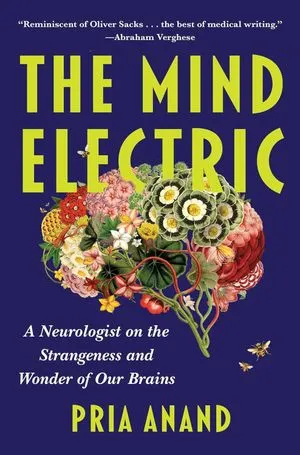
Unlike Hemingway, Faulkner, and Fitzgerald, her idealism was unironic, and she stood alone among the great modern authors—at odds with the fashionable attitudes of her time. Combining intricate analysis with an empathetic, lyrical voice, Benjamin Taylor uncovers the reality of Cather’s artistic development, from modest beginnings to the triumphs of her mature years. His book is simultaneously an homage to her character, a warm consideration of her work, and a case being made to read Cather with renewed vigor.
Carson McCullers
Mary V. Dearborn
The first major biography in more than twenty years of one of America’s greatest writers, based on newly available letters and journals
V. S. Pritchett called her “a genius.” Gore Vidal described her as a “beloved novelist of singular brilliance . . . Of all the Southern writers, she is the most apt to endure . . .” And Tennessee Williams said, “The only real writer the South ever turned out, was Carson.”
She was born Lula Carson Smith in Columbus, Georgia. Her dream was to become a concert pianist, though she’d been writing since she was sixteen and the influence of music was evident throughout her work. As a child, she said she’d been “born a man.” At twenty, she married Reeves McCullers, a fellow southerner, ex-soldier, and aspiring writer (“He was the best-looking man I had ever seen”). They had a fraught, tumultuous marriage lasting twelve years and ending with his suicide in 1953. Reeves was devoted to her and to her writing, and he envied her talent; she yearned for attention, mostly from women who admired her but rebuffed her sexually. Her first novel—The Heart Is a Lonely Hunter—was published in 1940, when she was twenty-three, and overnight, Carson McCullers became the most widely talked about writer of the time.
While McCullers’s literary stature continues to endure, her private life has remained enigmatic and largely unexamined. Now, with unprecedented access to the cache of materials that has surfaced in the past decade, Mary Dearborn gives us the first full picture of this brilliant, complex artist who was decades ahead of her time, a writer who understood—and captured—the heart and longing of the outcast.
The Swans of Harlem
Karen Valby
THE NEW YORK TIMES BOOK REVIEW NOTABLE BOOK • The forgotten story of a pioneering group of five Black ballerinas and their fifty-year sisterhood, a legacy erased from history—until now.
“This is the kind of history I wish I learned as a child dreaming of the stage!” —Misty Copeland, author of Black Ballerinas: My Journey to Our Legacy
“Utterly absorbing, flawlessly-researched…Vibrant, propulsive, and inspiring, The Swans of Harlem is a richly drawn portrait of five courageous women whose contributions have been silenced for too long!” —Tia Williams, author of A Love Song for Ricki Wilde
At the height of the Civil Rights movement, Lydia Abarca was a Black prima ballerina with a major international dance company—the Dance Theatre of Harlem, a troupe of women and men who became each other’s chosen family. She was the first Black company ballerina on the cover of Dance magazine, an Essence cover star; she was cast in The Wiz and in a Bob Fosse production on Broadway. She performed in some of ballet’s most iconic works with other trailblazing ballerinas, including the young women who became her closest friends—founding Dance Theatre of Harlem members Gayle McKinney-Griffith and Sheila Rohan, as well as first-generation dancers Karlya Shelton and Marcia Sells.
These Swans of Harlem performed for the Queen of England, Mick Jagger, and Stevie Wonder, on the same bill as Josephine Baker, at the White House, and beyond. But decades later there was almost no record of their groundbreaking history to be found. Out of a sisterhood that had grown even deeper with the years, these Swans joined forces again—to share their story with the world.
Captivating, rich in vivid detail and character, and steeped in the glamour and grit of professional ballet, The Swans of Harlem is a riveting account of five extraordinarily accomplished women, a celebration of both their historic careers and the sustaining, grounding power of female friendship, and a window into the robust history of Black ballet, hidden for too long.
COMBEE
Edda L. Fields-Black
The story of the Combahee River Raid, one of Harriet Tubman's most extraordinary accomplishments, based on original documents and written by a descendant of one of the participants.
Publishers Weekly Starred Review
Library Journal Starred Review
Booklist Top Ten History Books of 2024
Most Americans know of Harriet Tubman's legendary life: escaping enslavement in 1849, she led more than 60 others out of bondage via the Underground Railroad, gave instructions on getting to freedom to scores more, and went on to live a lifetime fighting for change. Yet the many biographies, children's books, and films about Tubman omit a crucial chapter: during the Civil War, hired by the Union Army, she ventured into the heart of slave territory--Beaufort, South Carolina--to live, work, and gather intelligence for a daring raid up the Combahee River to attack the major plantations of Rice Country, the breadbasket of the Confederacy.
Edda L. Fields-Black--herself a descendent of one of the participants in the raid--shows how Tubman commanded a ring of spies, scouts, and pilots and participated in military expeditions behind Confederate lines. On June 2, 1863, Tubman and her crew piloted two regiments of Black US Army soldiers, the Second South Carolina Volunteers, and their white commanders up coastal South Carolina's Combahee River in three gunboats. In a matter of hours, they torched eight rice plantations and liberated 730 people, people whose Lowcountry Creole language and culture Tubman could not even understand. Black men who had liberated themselves from bondage on South Carolina's Sea Island cotton plantations after the Battle of Port Royal in November 1861 enlisted in the Second South Carolina Volunteers and risked their lives in the effort.
Using previous unexamined documents, including Tubman's US Civil War Pension File, bills of sale, wills, marriage settlements, and estate papers from planters' families, Fields-Black brings to life intergenerational, extended enslaved families, neighbors, praise-house members, and sweethearts forced to work in South Carolina's deadly tidal rice swamps, sold, and separated during the antebellum period. When Tubman and the gunboats arrived and blew their steam whistles, many of those people clambered aboard, sailed to freedom, and were eventually reunited with their families. The able-bodied Black men freed in the Combahee River Raid enlisted in the Second South Carolina Volunteers and fought behind Confederate lines for the freedom of others still enslaved not just in South Carolina but Georgia and Florida.
After the war, many returned to the same rice plantations from which they had escaped, purchased land, married, and buried each other. These formerly enslaved peoples on the Sea Island indigo and cotton plantations, together with those in the semi-urban port cities of Charleston, Beaufort, and Savannah, and on rice plantations in the coastal plains, created the distinctly American Gullah Geechee dialect, culture, and identity--perhaps the most significant legacy of Harriet Tubman's Combahee River Raid.
Not Your China Doll
Katie Gee Salisbury
“Enlightening, nuanced, and honest.”—Lisa See
Set against the glittering backdrop of Los Angeles during the gin-soaked Jazz Age and the rise of Hollywood, this debut book celebrates Anna May Wong, the first Asian American movie star, to bring an unsung heroine to light and reclaim her place in cinema history.
One of Entertainment Weekly's "Books We Are Excited to Read in 2024"
Before Constance Wu, Sandra Oh, Awkwafina, or Lucy Liu, there was Anna May Wong. In her time, she was a legendary beauty, witty conversationalist, and fashion icon. Plucked from her family’s laundry business in Los Angeles, Anna May Wong rose to stardom in Douglas Fairbanks’s blockbuster The Thief of Bagdad. Fans and the press clamored to see more of this unlikely actress, but when Hollywood repeatedly cast her in stereotypical roles, she headed abroad in protest.
Anna May starred in acclaimed films in Berlin, Paris, and London. She dazzled royalty and heads of state across several nations, leaving trails of suitors in her wake. She returned to challenge Hollywood at its own game by speaking out about the industry’s blatant racism. She used her new stature to move away from her typecasting as the China doll or dragon lady, and worked to reshape Asian American representation in film.
Filled with stories of capricious directors and admiring costars, glamorous parties and far-flung love affairs, Not Your China Doll showcases the vibrant, radical life of a groundbreaking artist.
Wake
Rebecca Hall
A Best Book of the Year by NPR and The Washington Post
An imaginative and riveting tour de force that tells the “powerful” (The New York Times Book Review) story of women-led slave revolts and chronicles scholar Rebecca Hall’s efforts to uncover the truth about these female warriors who, until now, have been left out of the historical record.
Women warriors planned and led revolts on slave ships during the Middle Passage. They fought their enslavers throughout the Americas. And then they were erased from history.
Wake tells the “riveting” (Angela Y. Davis) story of Dr. Rebecca Hall, a historian, granddaughter of slaves, and a woman haunted by the legacy of slavery. The accepted history of slave revolts has always told her that enslaved women took a back seat. But Rebecca decides to look deeper, and her journey takes her through old court records, slave ship captain’s logs, crumbling correspondence, and even the forensic evidence from the bones of enslaved women from the “negro burying ground” uncovered in Manhattan. She finds women warriors everywhere.
Using a “remarkable blend of passion and fact, action and reflection” (NPR), Rebecca constructs the likely pasts of Adono and Alele, women rebels who fought for freedom during the Middle Passage, as well as the stories of women who led slave revolts in Colonial New York. We also follow Rebecca’s own story as the legacy of slavery shapes her life, both during her time as a successful attorney and later as a historian seeking the past that haunts her.
Illustrated beautifully in black and white, Wake will take its place alongside classics of the graphic novel genre, like Marjane Satrapi’s Persepolis and Art Spiegelman’s Maus. This story of a personal and national legacy is a powerful reminder that while the past is gone, we still live in its wake.
Women in the Valley of the Kings
Kathleen Sheppard
A GOODREADS CHOICE AWARD FINALIST FOR HISTORY AND BIOGRAPHY
"A new history of Egyptology that prioritizes the women whose contributions, for good and otherwise, shaped the field.” - The New York Times
The never-before-told story of the women Egyptologists who paved the way who paved the way for exploration in Egypt and laid the groundwork for Egyptology
The history of Egyptology is often told as yet one more grand narrative of powerful men striving to seize the day and the precious artifacts for their competing homelands. But that is only half of the story. During the so-called Golden Age of Exploration, there were women working and exploring before Howard Carter discovered the tomb of King Tut. Before men even conceived of claiming the story for themselves, women were working in Egypt to lay the groundwork for all future exploration.
In Women in the Valley of the Kings: The Untold Story of Women Egyptologists in the Gilded Age, Kathleen Sheppard brings the untold stories of these women back into this narrative. Sheppard begins with some of the earliest European women who ventured to Egypt as travelers: Amelia Edwards, Jenny Lane, and Marianne Brocklehurst. Their travelogues, diaries and maps chronicled a new world for the curious. In the vast desert, Maggie Benson, the first woman granted permission to excavate in Egypt, met Nettie Gourlay, the woman who became her lifelong companion. They battled issues of oppression and exclusion and, ultimately, are credited with excavating the Temple of Mut.
As each woman scored a success in the desert, she set up the women who came later for their own struggles and successes. Emma Andrews’ success as a patron and archaeologist helped to pave the way for Margaret Murray to teach. Margaret’s work in the university led to the artists Amice Calverley’s and Myrtle Broome’s ability to work on site at Abydos, creating brilliant reproductions of tomb art, and to Kate Bradbury’s and Caroline Ransom’s leadership in critical Egyptological institutions. Women in the Valley of the Kings upends the grand male narrative of Egyptian exploration and shows how a group of courageous women charted unknown territory and changed the field of Egyptology forever.
The Genius of Judy
Rachelle Bergstein
NATIONAL BESTSELLER
An intimate and expansive look at Judy Blume’s life, work, and cultural impact, focusing on her most iconic—and controversial—young adult novels, from Are You There God? It’s Me, Margaret. to Blubber.
Everyone knows Judy Blume.
Her books have garnered her fans of all ages for decades and sold tens of millions of copies. But why were people so drawn to them? And why are we still talking about them now in the 21st century?
In The Genius of Judy, her remarkable story is revealed as never before, beginning with her as a mother of two searching for purpose outside of her home in 1960s suburban New Jersey. The books she wrote starred regular children with genuine thoughts and problems. But behind those deceptively simple tales, Blume explored the pillars of the growing women’s rights movement, in which girls and women were entitled to careers, bodily autonomy, fulfilling relationships, and even sexual pleasure. Blume wasn’t trying to be a revolutionary—she just wanted to tell honest stories—but in doing so, she created a cohesive, culture-altering vision of modern adolescence.
Blume’s bravery provoked backlash, making her the country’s most-banned author in the mid-1980s. Thankfully, her works withstood those culture wars and it’s no coincidence that Blume has resurfaced as a cultural touchstone now. Young girls are still cat-called, sex education curricula are getting dismissed as pornography, and entire shelves of libraries are being banned. As we face these challenges, it’s only natural we look to Blume, the grand dame of so-called dirty books. This is the story of how a housewife became a groundbreaking artist, and how generations of empowered fans are her legacy, today more than ever.
The Elements of Marie Curie
Dava Sobel
The acclaimed Pulitzer Prize finalist and #1 New York Times bestselling author of Galileo's Daughter crafts a luminous chronicle of the life and work of the most famous woman in the history of science, and the untold story of the many young women trained in her laboratory who were launched into stellar scientific careers of their own
"Even now, nearly a century after her death, Marie Curie remains the only female scientist most people can name," writes Dava Sobel at the opening of her shining portrait of the sole Nobel laureate decorated in two separate fields of science--Physics in 1903 with her husband Pierre and Chemistry by herself in 1911. And yet, Sobel makes clear, as brilliant and creative as she was in the laboratory, Marie Curie was equally passionate outside it. Grieving Pierre's untimely death in 1906, she took his place as professor of physics at the Sorbonne; devotedly raised two brilliant daughters; drove a van she outfitted with x-ray equipment to the front lines of World War I; befriended Albert Einstein and other luminaries of twentieth-century physics; won support from two U.S. presidents; and inspired generations of young women the world over to pursue science as a way of life.
As Sobel did so memorably in her portrait of Galileo through the prism of his daughter, she approaches Marie Curie from a unique angle, narrating her remarkable life of discovery and fame alongside the women who became her legacy--from France's Marguerite Perey, who discovered the element francium, and Norway's Ellen Gleditsch, to Mme. Curie's elder daughter, Irène, winner of the 1935 Nobel Prize in Chemistry. For decades the only woman in the room at international scientific gatherings that probed new theories about the interior of the atom, Marie Curie traveled far and wide, despite constant illness, to share the secrets of radioactivity, a term she coined. Her two triumphant tours of the United States won her admirers for her modesty even as she was mobbed at every stop; her daughters, in Ève's later recollection, "discovered all at once what the retiring woman with whom they had always lived meant to the world."
With the consummate skill that made bestsellers of Longitude and Galileo's Daughter, and the appreciation for women in science at the heart of her most recent The Glass Universe, Dava Sobel has crafted a radiant biography and a masterpiece of storytelling, illuminating the life and enduring influence of one of the most consequential figures of our time.
The Movement
Clara Bingham
A comprehensive and engaging oral history of the decade that defined the feminist movement, including interviews with living icons and unsung heroes—from former Newsweek reporter and author of the “powerful and moving” (The New York Times) Witness to the Revolution.
For lovers of both Barbie and Gloria Steinem, The Movement is the first oral history of the decade that built the modern feminist movement. Through the captivating individual voices of the people who lived it, The Movement tells the intimate inside story of what it felt like to be at the forefront of the modern feminist crusade, when women rejected thousands of years of custom and demanded the freedom to be who they wanted and needed to be.
This engaging history traces women’s awakening, organizing, and agitating between the years of 1963 and 1973, when a decentralized collection of people and events coalesced to create a spontaneous combustion. From Betty Friedan’s The Feminine Mystique, to the underground abortion network the Janes, to Shirley Chisholm’s presidential campaign and Billie Jean King’s 1973 battle of the sexes, Bingham artfully weaves together the fragments of that explosion person by person, bringing to life the emotions of this personal, cultural, and political revolution. Artists and politicians, athletes and lawyers, Black and white, The Movement brings readers into the rooms where these women insisted on being treated as first class citizens, and in the process, changed the fabric of American life.
Sisters in Science
Olivia Campbell
The extraordinary true story of four women pioneers in physics during World War II and their daring escape out of Nazi Germany
In the 1930s, Germany was a hotbed of scientific thought. But after the Nazis took power, Jewish and female citizens were forced out of their academic positions. Hedwig Kohn, Lise Meitner, Hertha Sponer and Hildegard Stücklen were eminent in their fields, but they had no choice but to flee due to their Jewish ancestry or anti-Nazi sentiments.
Their harrowing journey out of Germany became a life-and-death situation that required Herculean efforts of friends and other prominent scientists. Lise fled to Sweden, where she made a groundbreaking discovery in nuclear physics, and the others fled to the United States, where they brought advanced physics to American universities. No matter their destination, each woman revolutionized the field of physics when all odds were stacked against them, galvanizing young women to do the same.
Well researched and written with cinematic prose, Sisters in Science brings these trailblazing women to life and shows us how sisterhood and scientific curiosity can transcend borders and persist--flourish, even--in the face of seemingly insurmountable odds.
The Cure for Women
Lydia Reeder
“Valiant and timely ... ‘The Cure for Women’ reintroduces its subject as a hero for this moment.” —The New York Times
How Victorian male doctors used false science to argue that women were unfit for anything but motherhood—and the brilliant doctor who defied them
After Elizabeth Blackwell became the first woman to graduate from medical school, more women demanded a chance to study medicine. Barred entrance to universities like Harvard, women built their own first-rate medical schools and hospitals. Their success spurred a chilling backlash from elite, white male physicians who were obsessed with eugenics and the propagation of the white race. Distorting Darwin’s evolution theory, these haughty physicians proclaimed in bestselling books that women should never be allowed to attend college or enter a profession because their menstrual cycles made them perpetually sick. Motherhood was their constitution and duty.
Into the midst of this turmoil marched tiny, dynamic Mary Putnam Jacobi, daughter of New York publisher George Palmer Putnam and the first woman to be accepted into the world-renowned Sorbonne medical school in Paris. As one of the best-educated doctors in the world, she returned to New York for the fight of her life. Aided by other prominent women physicians and suffragists, Jacobi conducted the first-ever data-backed, scientific research on women's reproductive biology. The results of her studies shook the foundations of medical science and higher education. Full of larger than life characters and cinematically written, The Cure for Women documents the birth of a sexist science still haunting us today as the fight for control of women’s bodies and lives continues.
Looking at Women Looking at War
Victoria Amelina
"Devastating...not to be missed." —Publishers Weekly (Starred)
Destined to be a classic, a poet’s powerful look at the courage of resistance
WITH A FOREWORD BY MARGARET ATWOOD
When Russia invaded Ukraine on February 24, 2022, Victoria Amelina was busy writing a novel, taking part in the country’s literary scene, and parenting her son. Now she became someone new: a war crimes researcher and the chronicler of extraordinary women like herself who joined the resistance. These heroines include Evgenia, a prominent lawyer turned soldier, Oleksandra, who documented tens of thousands of war crimes and won a Nobel Peace Prize in 2022, and Yulia, a librarian who helped uncover the abduction and murder of a children’s book author.
Everyone in Ukraine knew that Amelina was documenting the war. She photographed the ruins of schools and cultural centers; she recorded the testimonies of survivors and eyewitnesses to atrocities. And she slowly turned back into a storyteller, writing what would become this book.
On the evening of June 27th, 2023, Amelina and three international writers stopped for dinner in the embattled Donetsk region. When a Russian cruise missile hit the restaurant, Amelina suffered grievous head injuries, and lost consciousness. She died on July 1st. She was thirty-seven. She left behind an incredible account of the ravages of war and the cost of resistance. Honest, intimate, and wry, this book will be celebrated as a classic.
Give Her Credit
Grace L. Williams
The galvanizing true story of a group of remarkable women in the 1970s male-run world of business, banking, and finance. They didn't play by the rules. They changed them and made history.
In the 1970s, a new wave of feminism was sweeping America. But in the boys' club of banking and finance, women were still infantilized--no credit without a male cosigner, and their income was dismissed as unreliable. If bankers weren't going to accommodate women, then women had to take control of their own futures. In 1978 in Denver, Colorado, the opening of the Women's Bank changed everything.
It was helmed by bank officer B. LaRae Orullian and the brainchild of whip-smart entrepreneur Carol Green, who forged a groundbreaking path with their headstrong colleagues, among them: Judi Foster, investment research whiz; Edna Mosley, unyielding civil rights advocate with the NAACP; Mary Roebling, renowned financial executive; Betty Freedman, a socialite and fundraiser; and Gail Schoettler, a formidable Denver mover and shaker for social justice. Coming together and facing their own unique road to revolution, they built the most successful female-run bank in the nation. It wasn't easy.
Give Her Credit follows the challenges, uphill battles, and achievements of some of the enterprising women of Denver who broke boundaries, inspired millions, and afforded opportunities for every marginalized citizen in the country. It's about time their untold story was told.
Jane Austen's Bookshelf
Rebecca Romney
From rare book dealer and guest star of the hit show Pawn Stars, a page-turning literary adventure that introduces readers to the women writers who inspired Jane Austen—and investigates why their books have disappeared from our shelves.
Long before she was a rare book dealer, Rebecca Romney was a devoted reader of Jane Austen. She loved that Austen’s books took the lives of women seriously, explored relationships with wit and confidence, and always, allowed for the possibility of a happy ending. She read and reread them, often wishing Austen wrote just one more.
But Austen wasn’t a lone genius. She wrote at a time of great experimentation for women writers—and clues about those women, and the exceptional books they wrote, are sprinkled like breadcrumbs throughout Austen’s work. Every character in Northanger Abbey who isn’t a boor sings the praises of Ann Radcliffe. The play that causes such a stir in Mansfield Park is a real one by the playwright Elizabeth Inchbald. In fact, the phrase “pride and prejudice” came from Frances Burney’s second novel Cecilia. The women that populated Jane Austen’s bookshelf profoundly influenced her work; Austen looked up to them, passionately discussed their books with her friends, and used an appreciation of their books as a litmus test for whether someone had good taste. So where had these women gone? Why hadn’t Romney—despite her training—ever read them? Or, in some cases, even heard of them? And why were they no longer embraced as part of the wider literary canon?
Jane Austen’s Bookshelf investigates the disappearance of Austen’s heroes—women writers who were erased from the Western canon—to reveal who they were, what they meant to Austen, and how they were forgotten. Each chapter profiles a different writer including Frances Burney, Ann Radcliffe, Charlotte Lennox, Charlotte Smith, Hannah More, Elizabeth Inchbald, Hester Lynch Thrale Piozzi, and Maria Edgeworth—and recounts Romney’s experience reading them, finding rare copies of their works, and drawing on connections between their words and Austen’s. Romney collects the once-famed works of these forgotten writers, physically recreating Austen’s bookshelf and making a convincing case for why these books should be placed back on the to-be-read pile of all book lovers today. Jane Austen’s Bookshelf will encourage you to look beyond assigned reading lists, question who decides what belongs there, and build your very own collection of favorite novels.
Didion and Babitz
Lili Anolik
NATIONAL BESTSELLER * Named a Best Book of the Year by Time, Vogue, Vanity Fair, Air Mail, Harper’s Bazaar, The Washington Post, and more!
Joan Didion is revealed at last in this “vivid, engrossing” (Vogue), and outrageously provocative dual biography “that reads like a propulsive novel” (Oprah Daily) revealing the mutual attractions—and antagonisms—of Didion and her fellow literary titan, Eve Babitz.
Could you write what you write if you weren’t so tiny, Joan? —Eve Babitz, in a letter to Joan Didion, 1972
Eve Babitz died on December 17, 2021. Found in the wrack, ruin, and filth of her apartment, a stack of boxes packed by her mother decades before. The boxes were pristine, the seals of duct tape unbroken. Inside, a lost world. This world turned for a certain number of years in the late sixties and early seventies and centered on a two-story rental in a down-at-heel section of Hollywood.
7406 Franklin Avenue, a combination salon-hotbed-living end where writers and artists mixed with movie stars, rock ‘n’ rollers, and drug trash. 7406 Franklin Avenue was the making of one great American writer: Joan Didion, a mystery behind her dark glasses and cool expression; an enigma inside her storied marriage to John Gregory Dunne, their union as tortured as it was enduring. 7406 Franklin Avenue was the breaking and then the remaking—and thus the true making—of another great American writer: Eve Babitz, goddaughter of Igor Stravinsky, nude of Marcel Duchamp, consort of Jim Morrison (among many, many others), a woman who burned so hot she finally almost burned herself alive. Didion and Babitz formed a complicated alliance, a friendship that went bad, amity turning to enmity.
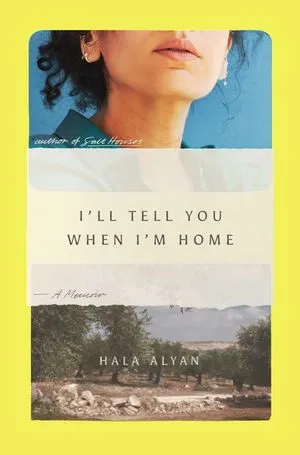
Didion, in spite of her confessional style, is so little known or understood. She’s remained opaque, elusive. Until now.
With deftness and skill, journalist Lili Anolik uses Babitz, Babitz’s brilliance of observation, Babitz’s incisive intelligence, and, most of all, Babitz’s diary-like letters—letters found in those sealed boxes, letters so intimate you don’t read them so much as breathe them—as the key to unlocking Didion. And “what the book makes clear is that Didion and Babitz were more alike than either would have liked to admit” (Time).
Monster High: Season 2
View Details
The Order
View Details
September 5
View Details